
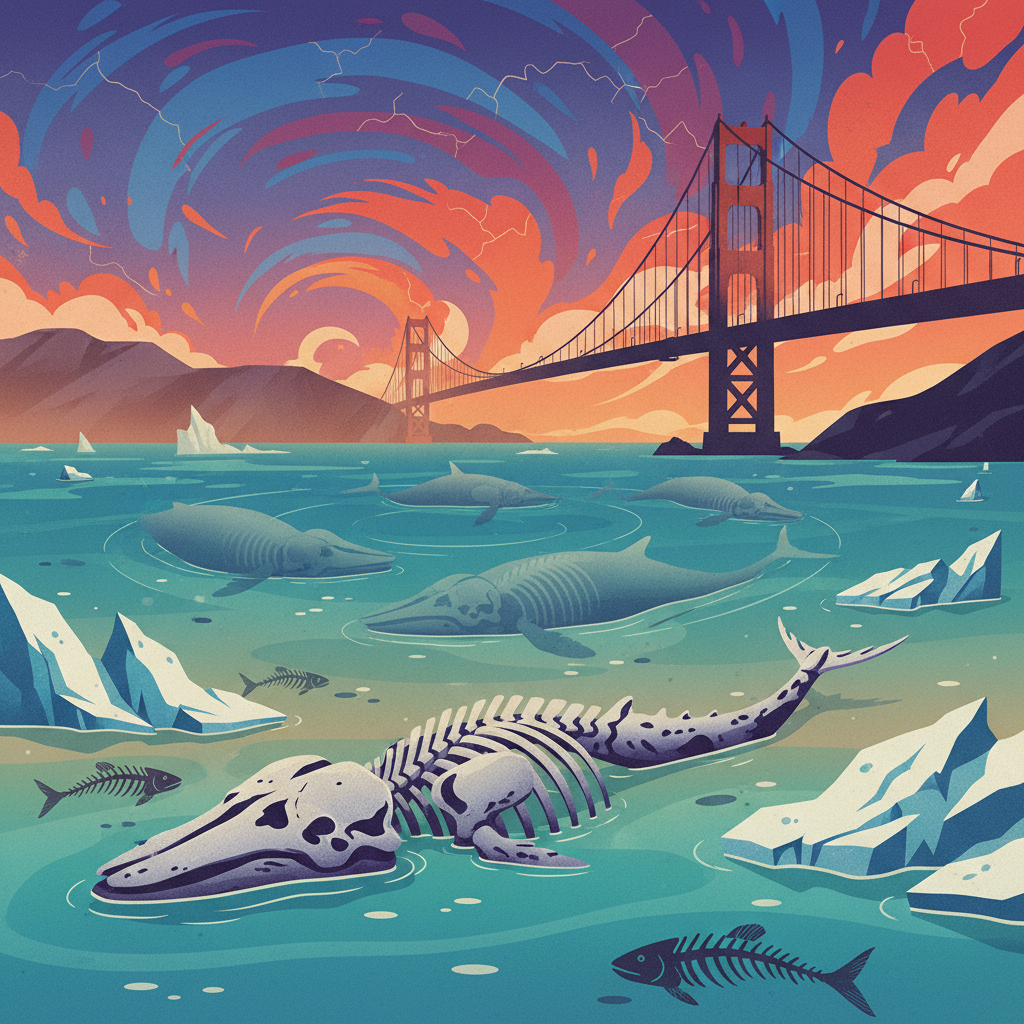
Gray Whale Deaths Surge in San Francisco Bay as Climate Crisis Disrupts Migration
A Marine Crisis Unfolds in San Francisco Bay
San Francisco Bay has become the epicenter of an unprecedented marine conservation crisis, with gray whales dying at record rates as climate change fundamentally disrupts their ancient migration patterns. According to reports, 21 gray whales died in the bay during 2025 alone, marking what scientists have classified as an “unusual mortality event.”
This alarming trend represents more than isolated incidents—it’s a stark indicator of dramatic shifts occurring throughout marine ecosystems. The whales are essentially serving as canaries in the coal mine, signaling broader ocean health problems that scientists warn will eventually impact human populations as well.
Population Collapse Reflects Ecosystem Disruption
The scale of the crisis becomes clear when examining population data. Gray whale numbers have plummeted catastrophically from 27,000 to just 12,500 in only nine years—a decline that has sent shockwaves through the marine biology community.
According to reports, the whales are arriving in San Francisco Bay earlier than ever before and in visibly deteriorated condition, appearing significantly skinnier than in previous years. This timing shift and physical decline point to fundamental changes in their Arctic feeding grounds, where climate change is reducing the food supplies these massive mammals depend on for survival.
New Behavioral Patterns Emerge
Perhaps most concerning is the emergence of entirely new whale behavior. Rather than simply passing through during their traditional migration route, gray whales have begun stopping in San Francisco Bay—a deviation from established patterns that has caught researchers off guard.
This behavioral shift creates a perfect storm of threats. As the whales linger in busy shipping lanes, they face increased risk of vessel strikes, adding human-caused mortality to their already precarious situation caused by climate-related food scarcity.
Scientists Race Against Time
Researchers are working urgently to understand these unprecedented changes in gray whale behavior and ecology. The intersection of climate change, human maritime infrastructure, and wildlife adaptation presents a complex puzzle that marine biologists are racing to solve before the situation deteriorates further.
The crisis has created what some describe as a David-vs-Goliath scenario, with dedicated scientists and innovative Coast Guard solutions working against the massive challenge of industrial shipping and global climate change. This struggle highlights the broader tension between human economic activities and wildlife conservation in an era of rapid environmental change.
A Bay Transformed Into Unexpected Refuge
Ironically, San Francisco Bay’s emergence as a stopping point for distressed gray whales has transformed it into an unexpected wildlife refuge. This development offers both research opportunities and conservation challenges, as scientists work to understand how urban waterways might serve as havens for climate-displaced marine species.
The situation presents unique opportunities for citizen science monitoring, allowing local communities to contribute to conservation efforts while witnessing firsthand the impacts of global climate change on marine life.
Hope Amid Crisis
Despite the grim statistics, conservation experts point to reasons for cautious optimism. Gray whales have demonstrated remarkable resilience before, having recovered from previous population declines. This history suggests that with proper intervention and management, recovery remains possible.
The current crisis in San Francisco Bay could potentially serve as a model for coexistence between human activities and marine wildlife adaptation. Solutions being developed for vessel strike prevention and maritime innovation may prove applicable to other regions facing similar challenges.
Broader Implications for Ocean Health
The gray whale crisis extends far beyond a single species or location. These deaths in San Francisco Bay represent a visible manifestation of climate change’s impact on marine food chains and migration patterns worldwide.
As Arctic ice continues to diminish and ocean temperatures rise, the disruption of established feeding grounds affects entire ecosystems. The gray whales’ struggle provides critical insights into how climate change is reshaping marine environments and forcing species to adapt to rapidly changing conditions.
The ongoing monitoring of this situation will be crucial for understanding broader patterns of climate-driven wildlife displacement and developing strategies to protect marine species in an era of unprecedented environmental change.